- Dog Juice
- Posts
- A Drug That Could Extend Your Dog's Life Just Got FDA-Cleared
A Drug That Could Extend Your Dog's Life Just Got FDA-Cleared
This is the dog news I've been waiting years to write...

Bryan Reisberg
April 16, 2026
What if your dog could live five more years?

Hey. I want to talk about the thing nobody who loves a dog wants to think about too hard: the timeline. The math we all do in the back of our heads the day we bring them home, or the day we find out they've got something. Maxine is nine now. And I'll be honest, I've been spending a lot of time lately reading everything I can about what the science actually says about dog longevity, because the answer is changing fast.
There's a San Francisco biotech company called Loyal that has been working on a drug specifically designed to extend the healthy lifespan of senior dogs. It's not a supplement. It's not a wellness product. It's a pharmaceutical, a daily prescription pill, that just hit two of the three major FDA milestones required for conditional market approval. And if things go the way they're tracking, it could be sitting in your vet's office before the clinical trial even officially concludes.
Let me break down what we actually know.
What is LOY-002, and why does it matter?

Loyal's drug, called LOY-002, works as what's called a caloric restriction mimetic. There's a well-established body of research showing that significantly reducing caloric intake can extend lifespan in dogs — a landmark Purina study found calorie-restricted dogs lived roughly two years longer on average. The problem is that severely restricting your dog's food is both impractical and, for most dogs, genuinely unkind. LOY-002 aims to achieve the same biological benefits through a daily pill, without the suffering. As Loyal's director of veterinary medicine told Fortune: "Part of the genius of the idea of LOY-002 is that it achieves some of the same goals biologically as caloric restriction without the hardship and the risks of doing that."
The broader mechanism targets age-related metabolic dysfunction, essentially the systemic decline that underlies most of the diseases senior dogs deal with: arthritis, cognitive dysfunction, cancer, kidney disease. Rather than treating each disease as it shows up, Loyal's approach is to attack the root cause upstream.
The STAY study, Loyal's pivotal clinical trial for LOY-002, is the largest clinical trial ever conducted in veterinary medicine. It completed enrollment in July 2025 with 1,300 dogs across 70 veterinary clinics nationwide, in a randomized, double-blinded, placebo-controlled design. That's the gold standard of clinical research.
And here's the really significant recent news: in January 2026, the FDA accepted LOY-002's Target Animal Safety package meaning the agency formally agrees the drug's data supports its safety for the intended use. That's the second of three major technical sections required for conditional approval. The first, a Reasonable Expectation of Effectiveness designation, came in February 2025. Only the manufacturing section remains, which Loyal expects to complete in 2027.
"There is no drug that solves this problem. There's nothing available to try to target aging and help dogs live longer. So if we can show that it's safe and that it's likely to work, we can bring it to dog owners and veterinarians sooner."
Could this really be at your vet before the study is done?
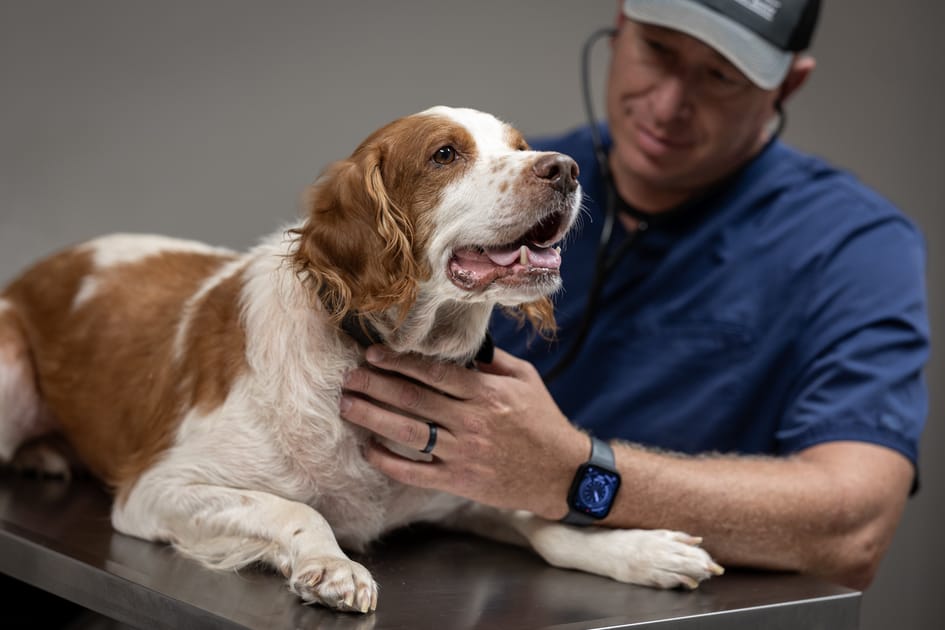
Yes, and that's not spin, it's how the FDA's Expanded Conditional Approval pathway works. It's a mechanism designed specifically for situations where a drug has demonstrated safety and a reasonable expectation of effectiveness, but long-term efficacy data is still being gathered. Think of it like a provisional green light: Loyal can bring the drug to market and sell it while the STAY study continues to run. Full approval follows after the trial concludes.
If LOY-002 clears that final manufacturing hurdle and receives conditional approval, it would be, per Loyal's own FDA filings, the first FDA-approved drug for lifespan extension in any species. Not just dogs. Any species. That's a genuinely historic milestone if it happens.
It's also worth noting that LOY-002 is designed for dogs 10 years and older weighing at least 14 lbs, so this is a drug for senior dogs who are, as the vet in Loyal's trial put it, already showing "signs of unhealthy aging." It's not a puppy drug. It's aimed at giving your dog's last chapter more quality time.
There's a whole movement behind this
Loyal isn't operating in a vacuum. The Dog Aging Project, a NIH-funded initiative tracking 50,000 companion dogs, is running a parallel clinical trial called TRIAD, testing whether rapamycin (an immunosuppressant commonly used in human organ transplants) can extend healthy lifespan in dogs. The project received a $7 million grant from the National Institute on Aging and is actively enrolling dogs now.
60 Minutes ran a full segment on it on March 22, which tells you how much this has crossed into mainstream consciousness. Anderson Cooper spent the segment asking the exact question every dog owner carries around quietly: what if we could get more time?
The tension, though, is real. The Dog Aging Project is under serious funding pressure. Federal research grants are in jeopardy under the current administration's budget environment, and the project has been scrambling to piece together funding from multiple sources after a lapse in 2024. Scientists have called it "the most informative study of aging that was not done in humans." The irony of it losing steam right as it's hitting its stride is not lost on me.
So what do you actually do with all this?
A few concrete things worth doing right now.
If you have a senior dog (10+, 14 lbs or more), keep close tabs on Loyal's approval timeline. They're also developing LOY-001 and LOY-003 for large and giant breeds starting at age 7 and 5 respectively, so if you have a big dog, that pipeline matters too. Sign up for updates directly on their site.
If you want to support the science that makes all of this possible, you can enroll your dog in the Dog Aging Project right now. It doesn't require anything clinical, just annual health surveys and some basic data. The more dogs enrolled, the more statistically powerful the research becomes. It takes about 20 minutes and could help extend the lives of future dogs.
And the bigger thing I'd say is this: the conversation around dog health is shifting from reactive to proactive in a genuinely meaningful way. Not just supplements, not just treating problems as they appear, but actually understanding the mechanisms of aging and intervening upstream. Morris Animal Foundation research published in February 2026 is even working toward a way to measure your dog's biological age, not just their chronological age, so that care can be personalized to how they're actually aging internally. That's new. That's exciting. And for anyone who's ever done the quiet math on their dog's timeline, it's worth paying close attention.
Maxine sends her regards. She's been on her PEMF mat and vibrating with good energy this week, which I choose to believe is deeply meaningful.
“The Squeeze”: Dog News In 60 Seconds

Today’s Last Laugh:
You know what? Hell yeah.
@theferalcheeto going down down baby @caprisun #cat #catsoftiktok #cattok #fyp #toddlersoftiktok